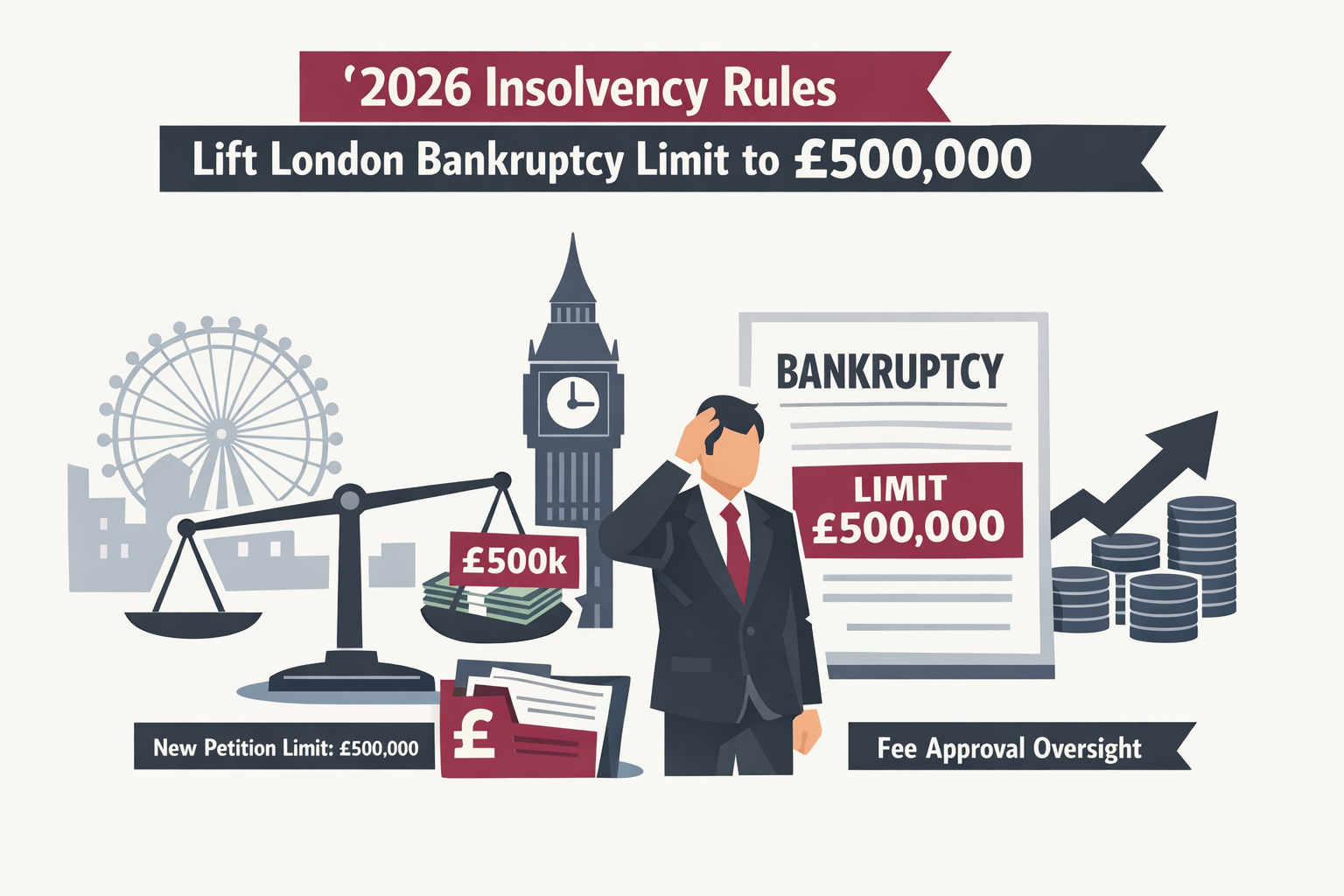
The Insolvency (England and Wales) (Amendment) Rules 2026 are being presented as a tidy post-implementation clean-up of the 2016 ruleset. In one sense that is fair. The Insolvency Service’s first formal review of the 2016 Rules, published in April 2022 after a 2021 call for evidence, said the rules were broadly operating correctly while also identifying points that needed correction or clarification. This instrument sits in that long tail of repairs rather than amounting to a wholesale rewrite. (gov.uk) But creditors should not let the word "clarify" do too much work. Procedure decides who gets heard, who signs off fees, which court handles a petition and how quickly an appointment takes effect. Inside insolvency cases, those details are rarely neutral. They shape bargaining power, cost and scrutiny, particularly where office-holders later say extra work has pushed the bill past the estimate first shown to creditors. (gov.uk)
The change with the clearest commercial consequence is the ten-fold increase in the London Insolvency District bankruptcy petition threshold, from £50,000 to £500,000, due to take effect on 22 June under the instrument text provided. That matters because GOV.UK still says that, in London, a creditor can currently submit a petition online where the debtor lives in London and owes £50,000 or more, and a current judiciary pilot note still routes London Insolvency District petitions through Central London County Court and the Rolls Building machinery. (gov.uk) The Explanatory Note says no full impact assessment has been produced because no significant impact is foreseen. That looks optimistic. Government departments, including HMRC, present all petitions in London under current guidance, and any creditor considering bankruptcy as a pressure tool will now need to ask whether London has just become a forum reserved for materially larger claims. Smaller creditors are entitled to ask what problem was being solved, and for whose convenience. (gov.uk)
On remuneration, the amendment to rule 18.30 is less dramatic but more important than it first appears. Since the fee-estimate regime was introduced, the policy line from government has been that estimates are supposed to act as a cap, with creditors getting a further say before an insolvency practitioner draws more than the approved figure. GOV.UK guidance for creditors still explains the system in those terms, and the 2022 review repeated that the point of fee estimates was to stop creditors discovering the true cost only at the end. (gov.uk) The new drafting, as set out in the instrument text provided, makes the route clearer: if the court fixed the basis, the application goes back to court; if there is a committee, the committee decides unless the court fixed it; otherwise the decision goes to the creditors, or the class of creditors, that fixed the basis. That is not a new creditor protection so much as a cleaner chain of accountability. But cleaner wording matters, because ambiguity is where overcharging arguments are often smothered under procedure before anyone reaches the substance of the bill. (gov.uk)
The replacement of "registrar" with "judge" also deserves more than a passing glance. The current Practice Direction – Insolvency Proceedings already works with a detailed judicial map that includes District Judges, ICC Judges, Circuit Judges and High Court Judges, and even preserves the historical note that an ICC Judge was previously called a Registrar in Bankruptcy. Moving the Rules to speak simply of an appropriate judge under the Practice Direction brings the statutory language closer to the way insolvency work is actually allocated today. (justice.gov.uk) That is more than house style. When rules keep using titles that court users no longer see in practice, the result is confusion for litigants in person, more room for avoidable objections, and a higher dependence on specialist representatives just to work out who can hear what. The change should reduce that friction, although it will only do so if court forms, guidance and filing systems are updated with the same discipline. (justice.gov.uk)
The removal of fax from the rules is overdue, but it is still revealing. Older Insolvency Service guidance on out-of-hours administrator appointments, last updated in 2019, says England and Wales appointments can be filed by email or fax, and the current text of the 2016 rules still contains fax-era mechanics such as transmission reports and multiple hard copies. Against that background, the 2026 amendments do what the rulebook should have done some time ago: they accept that electronic delivery is the real system and that fax is not. (gov.uk) The related change allowing a single electronic copy where the rules would otherwise demand more than one is sensible, but it also shows how slowly procedural law sometimes catches up with court administration. Creditors and practitioners should not assume every official page has caught up already. At the end of May 2026, public guidance still points users to a fax option for certain filings. If the rulebook is moving on from that on 22 June, the supporting guidance needs to move with it. (gov.uk)
Elsewhere, the instrument tidies cross-border terminology, corrects where a trustee must send completion notices in adjudicator bankruptcies, and strips out other dated references that have lingered since the 2016 consolidation. None of that will produce headlines in the general press. For people inside cases, however, this is exactly how accountability is weakened or strengthened: by who receives the notice, who signs the order, and who has to say yes before more money is taken out of the estate. The Insolvency Rules Committee exists because these details matter and because amendments to the rules are supposed to be tested before they are made. (gov.uk) The sharper reading of this statutory instrument is therefore straightforward. Some of it is housekeeping. Some of it is the state finally admitting fax has died. But the jump to a £500,000 London petition threshold and the tighter wording on fee-overrun approvals are not cosmetic. They change where pressure can be applied and who has to answer when the meter keeps running. That is where creditors should keep their attention from 22 June onwards. (gov.uk)