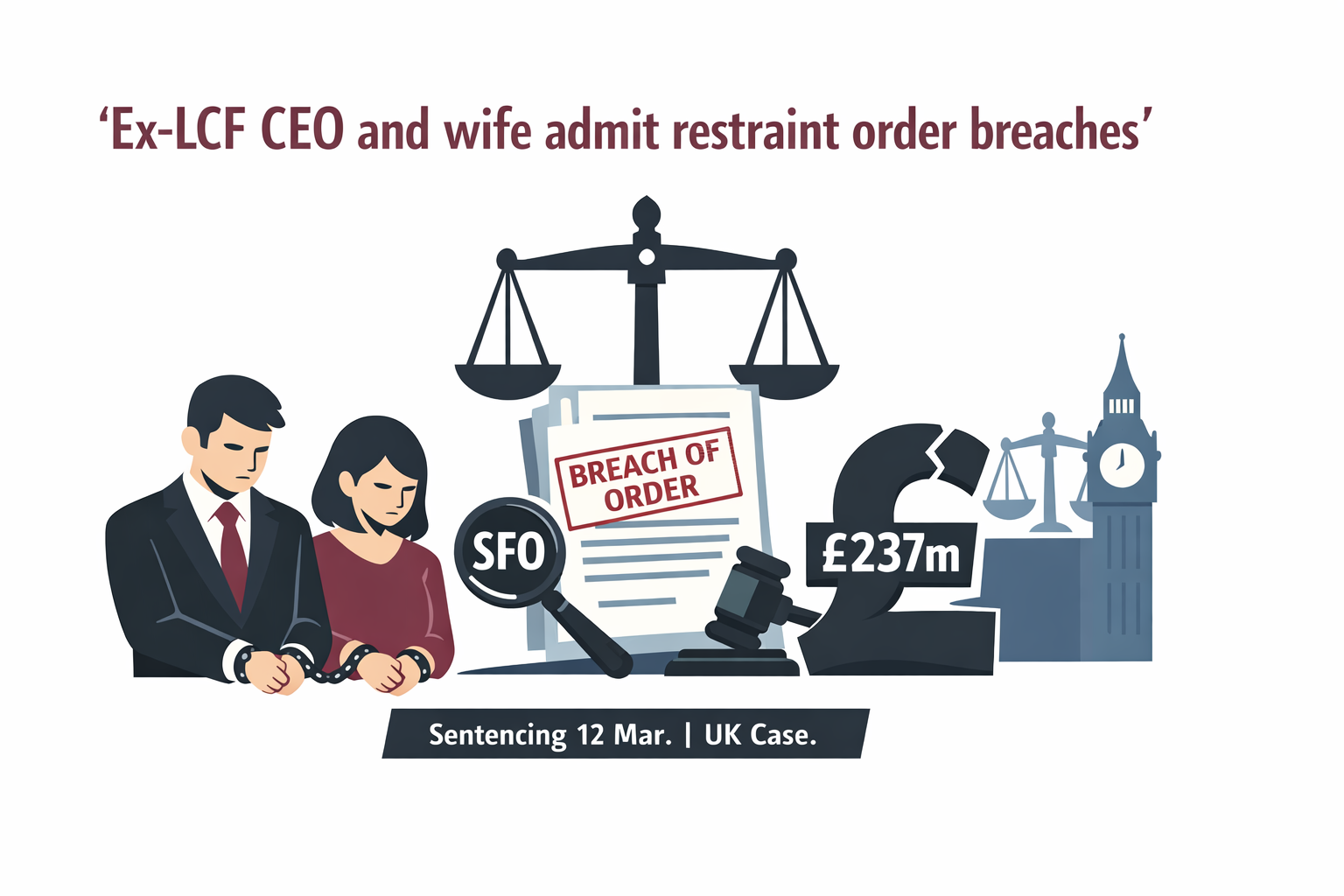
Michael Thomson, former chief executive of London Capital & Finance (LCF), and his wife, Debbie Thomson, have admitted multiple breaches of a court restraint order. A judge found both in contempt following a Serious Fraud Office (SFO) application, with sentencing listed for 12 March.
Restraint orders are supposed to ringfence assets while criminal investigations and proceedings play out. For creditors and bondholders, they are a basic safeguard against dissipation. When they are ignored, the question is not just what has gone but whether oversight is working as intended.
According to the SFO, the Thomsons received a £2,000 holiday refund and sold personal items including a hot tub and horse saddles worth nearly £5,800, all in breach of the order. The conduct occurred while Michael Thomson was already serving a suspended sentence for an earlier breach involving a £95,000 transfer to his wife, an attempt investigators say was designed to conceal funds.
This pattern matters. Creditors have heard promises that assets will be preserved for any future compensation or confiscation orders. Yet each breach chips away at confidence that protective measures have real bite when tested against determined subjects.
The SFO says its LCF investigation covers activity between 2014 and 2019, a period that left some 11,000 investors facing losses in excess of £237m. Those figures define the stakes. For bondholders still waiting on answers, every recoverable pound counts and delay erodes value.
Contempt for breaching a restraint order can attract fines or imprisonment. The court will decide the penalty on 12 March, but repeated violations are likely to weigh heavily when the bench assesses both culpability and deterrence.
Paul Napper, who leads the SFO’s Proceeds of Crime and International Assistance Division, noted this is the second time the agency has successfully established contempt against Michael Thomson and signalled further action whenever restraint conditions are flouted. That message will be welcomed by investors only if it translates into visible asset preservation.
The immediate issues for stakeholders are practical: what assets remain under restraint, what has been realised, and how any proceeds would flow back to victims. The agencies involved should publish a consolidated picture of frozen, seized and at-risk assets, rather than piecemeal updates that leave creditors guessing.
Inside Corporate Insolvency will monitor the 12 March hearing and press for clarity on any recovery orders or compensation directions arising from the contempt findings, alongside implications for the timing and scale of any future distributions.