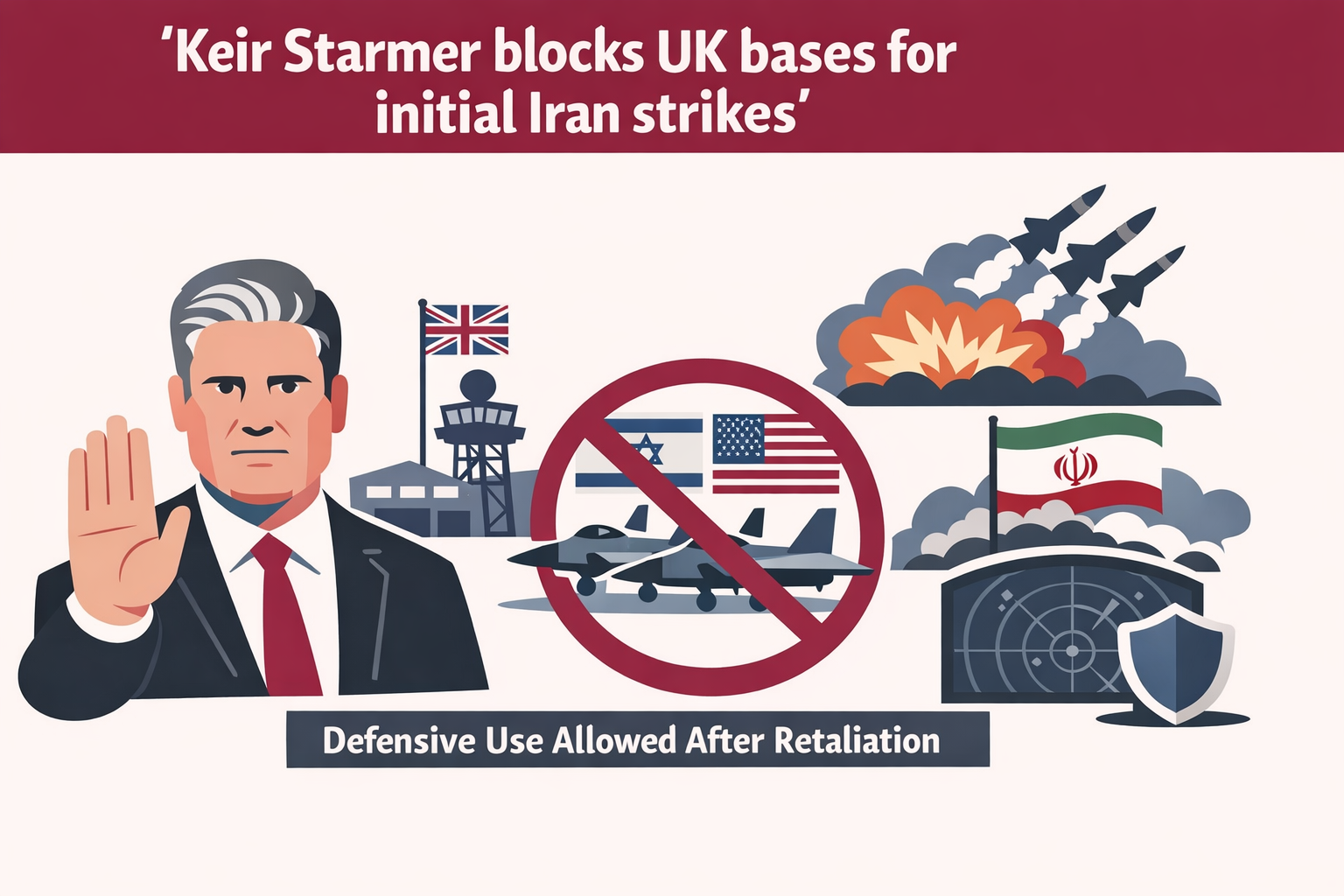
Downing Street drew a clear line: Britain “does not believe in regime change from the skies.” In his first statement to Parliament since the US‑Israeli strikes on Iran, Prime Minister Keir Starmer defended refusing the use of UK bases for the opening attacks, acknowledging President Trump’s disagreement but insisting his decisions were guided by the national interest.
That calculation changed when Iran launched what Starmer called an “outrageous” response. Ministers then authorised the use of British bases for strikes described as strictly “defensive” and aimed at Iranian missile infrastructure. The Prime Minister told MPs the United Kingdom was not joining offensive action and that the distinction matters for law and policy alike.
According to BBC News reporting, Washington had sought access to Diego Garcia in the Indian Ocean and RAF Fairford in Gloucestershire for the first wave. Starmer said he declined, citing the “lessons of Iraq” and the need for a lawful basis and an objective that can realistically be achieved.
Starmer also pointed to a drone attack on RAF Akrotiri in Cyprus-“not being used by US bombers,” he told MPs-as evidence that British people and assets were placed at risk by Tehran’s retaliation. The government argues that threat to UK nationals across the Middle East justified permitting base access for defensive purposes.
Events moved at speed. On Saturday, the United States and Israel struck Iran, killing Supreme Leader Ayatollah Ali Khamenei, BBC News reported. Tehran responded by firing missiles and drones across the region, targeting Israel and Gulf states and threatening shipping in the Strait of Hormuz-an escalation that widened the risk to British citizens and commercial interests.
At Westminster, the Prime Minister faced fire from the right. Conservative leader Kemi Badenoch accused him of “dither and delay” and urged him to stand fully behind the United States, noting that Australia and Canada immediately backed Washington’s action. Reform UK’s Richard Tice argued that Trump had “done the West a… favour” and claimed the UK looked humiliated.
Criticism came from the left as well. Liberal Democrat leader Sir Ed Davey warned that failing to stand up to Trump “makes our country less safe,” invoking previous US‑led interventions with no clear endgame. The Greens’ Ellie Chowns condemned the US‑Israeli strike as “deeply irresponsible and illegal” and demanded a parliamentary vote on any UK involvement.
Starmer pushed back: “We are not at war,” he said, stressing that British bases are being used only for agreed defensive purposes. He told MPs his test was twofold-lawful basis and a viable, thought‑through objective-and that those principles shaped decisions over the weekend.
Scotland’s First Minister John Swinney joined the critics, saying the decision to allow US use of UK bases “creates further risks and dangers.” Meanwhile, the Foreign Office urged Britons, including holidaymakers and business travellers, to register their presence in the region; officials say more than 100,000 have now done so, and contingency plans are in place if Gulf flights remain grounded.
For all the rhetoric, key accountability questions remain. What, in operational terms, counts as “defensive” and who decides in real time? Which legal route underpins each step and will any advice be published? And will MPs get a vote if the mission expands? Starmer offered intent-and the promise of restraint-but little documentary detail. Creditors and corporate risk managers with staff in the region will want clearer answers before the next decision point.