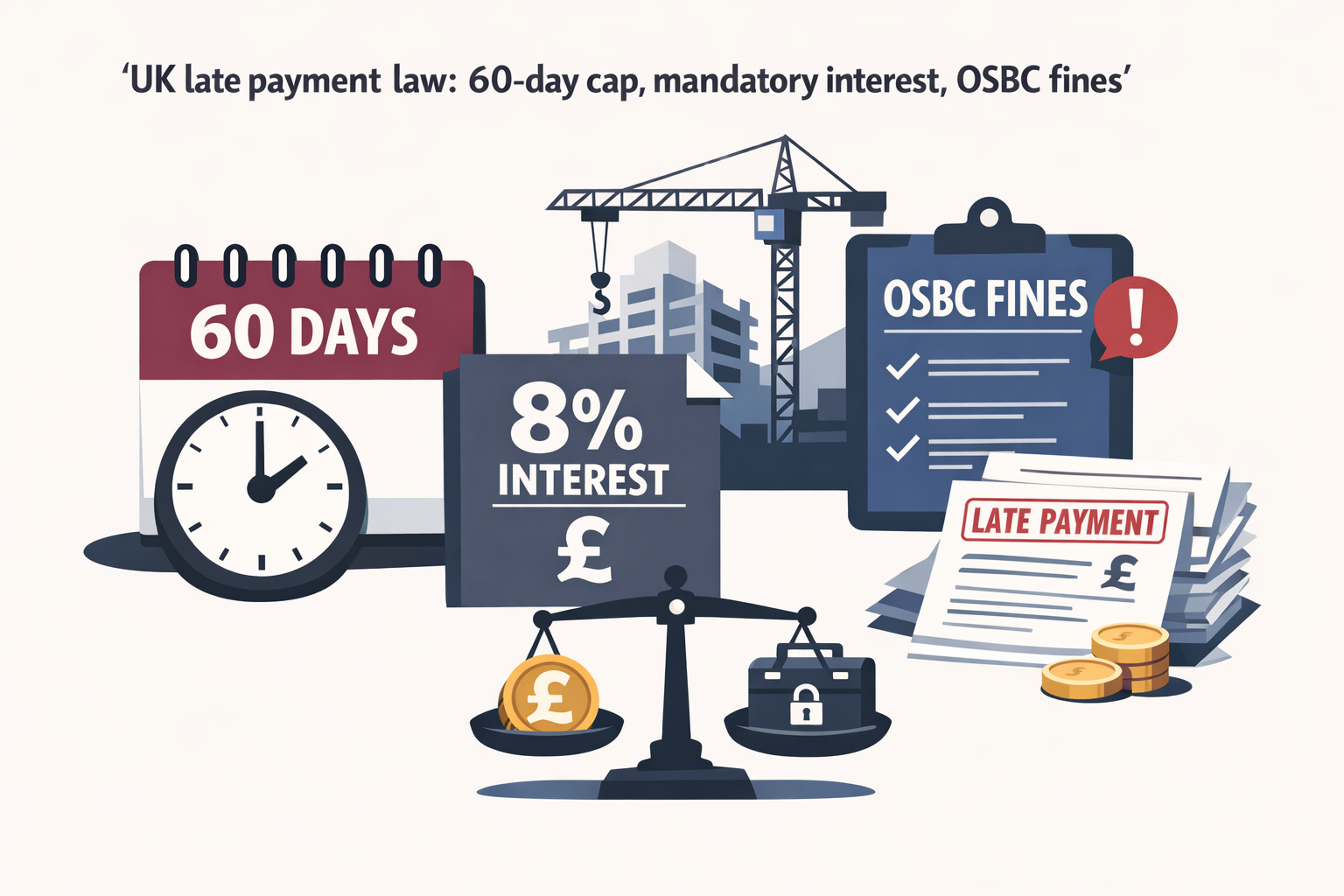
On 24 March 2026 the Government promised the most sweeping overhaul of UK payment law in a generation. A hard 60‑day ceiling on payment terms from large buyers to smaller suppliers, mandatory statutory interest at 8% above Bank of England base rate for late invoices, and new enforcement powers for the Small Business Commissioner (SBC) sit at the core of the package. Ministers describe it as the toughest regime in the G7; the reality will hinge on how fast the powers reach the statute book and whether they are used. (gov.uk)
Why it matters for insolvency is brutally simple. Department for Business and Trade (DBT) research puts the drag from late payment at about £11bn a year and links it to an average of 38 business closures every day - a steady churn that lands with creditors as missed deadlines, stretched payment plans and, too often, petitions to wind up. These numbers have underpinned the case for intervention for months, but today’s announcement puts legislative force behind them. (gov.uk)
Beyond headlines, the policy detail points to structural change. DBT’s consultation sets a statutory maximum of 60 days for B2B terms, with a stated intention to reduce that to 45 days after five years following further consultation. A new 30‑day invoice verification deadline would prevent disputes being raised months later to stall payment. Crucially, the SBC would gain powers to investigate poor payers and deliver legally binding arbitration - a marked departure from the office’s largely persuasive role since 2017. (gov.uk)
Mandatory interest is the second pillar. The 1998 Act already allows creditors to claim 8% above base rate on overdue qualifying debts, but many contracts dilute that right or suppliers avoid claiming to preserve relationships. The proposal removes the ability to contract out, hard‑wiring statutory interest into commercial agreements so that late payment automatically carries a cost. If enacted, suppliers would not have to ask; debt would accrue interest by law. (gov.uk)
What will fines look like in practice? DBT’s primary‑legislation options paper sketches a model where large firms paying more than a set share of invoices late could face penalties calculated as multiples of their unpaid statutory‑interest liability - with a proposed cap at 2% of annual turnover or £8.7m, whichever is higher. That is the origin of the ‘multi‑million’ language in today’s press release and, on paper, it bites. The question is whether thresholds and resourcing will make it real. (assets.publishing.service.gov.uk)
Transparency rules are also tightening. The Payment Practices Reporting regime, expanded for financial years starting on or after 1 January 2025, now forces companies to disclose the value as well as the volume of payments made within 30, 31–60 and 61+ days, plus the sum due but not paid within agreed terms. From 1 April 2025, firms must state whether their construction contracts use retentions and, if so, report on those practices. Government also plans to push boards and audit committees to comment on payment performance in annual reports - moving the conversation from the AP ledger to the boardroom. (gov.uk)
There is an explicit attempt to close obvious gaming. Officials note the risk that companies could pay small invoices promptly while stringing out large ones to look compliant - hence the new “value of payments” metrics and talk of assurance powers for the SBC. Whether those checks will be frequent and forensic enough is an enforcement question, not a policy one. (assets.publishing.service.gov.uk)
Construction retentions - routinely 5% withheld until defects are made good - are squarely in scope. Ministers are consulting on two routes: an outright ban on retention clauses, or a requirement to protect retained sums via segregated accounts or instruments of guarantee, with automatic release triggers post‑defects period. Either would change cashflow through the supply chain and, crucially, protect subcontractors from losing retentions in an upstream insolvency. The trade‑off is pressure on working capital for principal contractors already running thin margins. (gov.uk)
Track record matters. The SBC says it recovered over £10m in late payments since inception and three times more in 2025 than 2024 - evidence the office can move money when it leans in. Yet Whitehall’s history on new regulatory powers is mixed: Companies House, for example, collected just £1,250 in fines in the early phase of its ‘crackdown’ on abuse of the register. The message for creditors is clear: do not assume the deterrent exists until you see it deployed. (smallbusinesscommissioner.gov.uk)
The Federation of Small Businesses welcomes the cap but pointedly notes that 60 days “is not prompt” and argues for 30‑day norms across supply chains. DBT’s own analysis also warns of an anchoring risk: tougher penalties could nudge some buyers to default to the legal maximum to reduce their breach risk, which is precisely why the Government trails a future shift to 45 days. This tension - between headline ‘toughness’ and behavioural incentives - will decide whether suppliers actually see cash sooner. (gov.uk)
For creditors pursuing recovery, two features stand out. First, mandatory interest will standardise the uplift on overdue sums without a contractual fight, sharpening the arithmetic behind statutory demands. Second, if a 30‑day dispute cut‑off is legislated, more debts will be truly undisputed. With the winding‑up threshold back at £750 since pandemic easements expired, we expect more threats of petitions - and more pushback on alleged ‘disputes’ to keep debts below threshold. (russell-cooke.co.uk)
Public procurement has already moved faster. The Procurement Act now steps bidders toward 45‑day supplier payment performance (heading to 30 days in time), and this package aims to pull the private sector into line. But for general B2B trade the Government still needs to legislate, set commencement dates, and spell out appeals and audit mechanics for SBC penalties. The devil will be in those secondary rules. (gov.uk)
One more area to watch is construction retentions. If ministers opt for protection over prohibition, expect disputes over whether sums were adequately segregated or guaranteed - and litigation the first time a payer’s insolvency tests the protection. If they opt for a ban, expect principal contractors to seek alternative security, with potential cost pass‑throughs. Either way, creditors should anticipate fewer unsecured write‑offs of retention money, and more documentary scrutiny. (gov.uk)
Today’s announcement is not the end of the argument; it begins it. Government has put late payment and retentions squarely in the sights, backed by penalties that - on the page - could reshape incentives. Whether this becomes more than a headline will depend on how quickly the Bill appears, the thresholds finally chosen, and whether the SBC is funded and prepared to use its teeth. Inside Corporate Insolvency will track the draft clauses, commencement orders and first test cases as they land. (gov.uk)